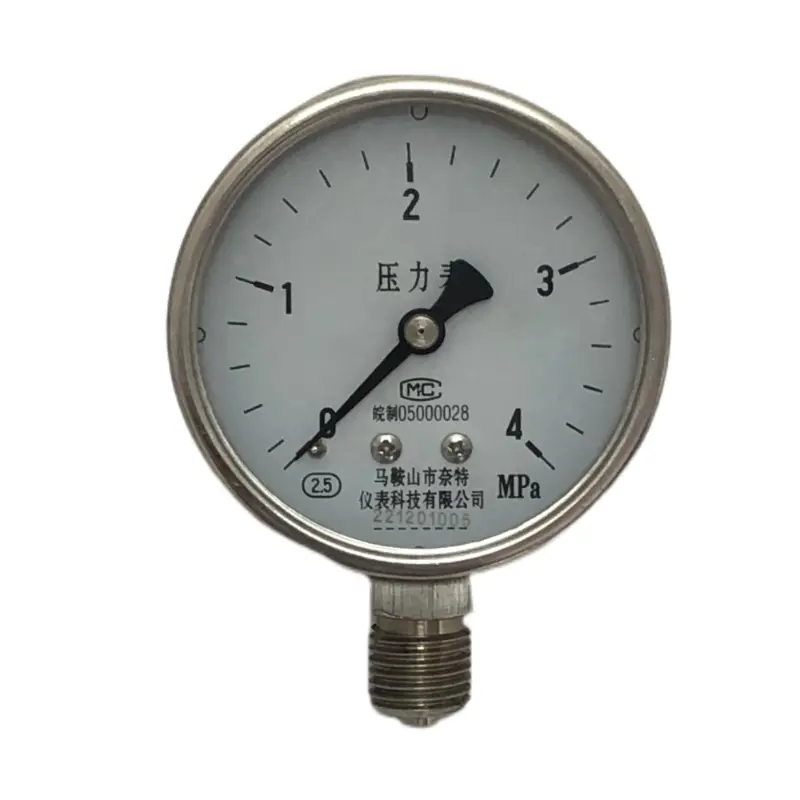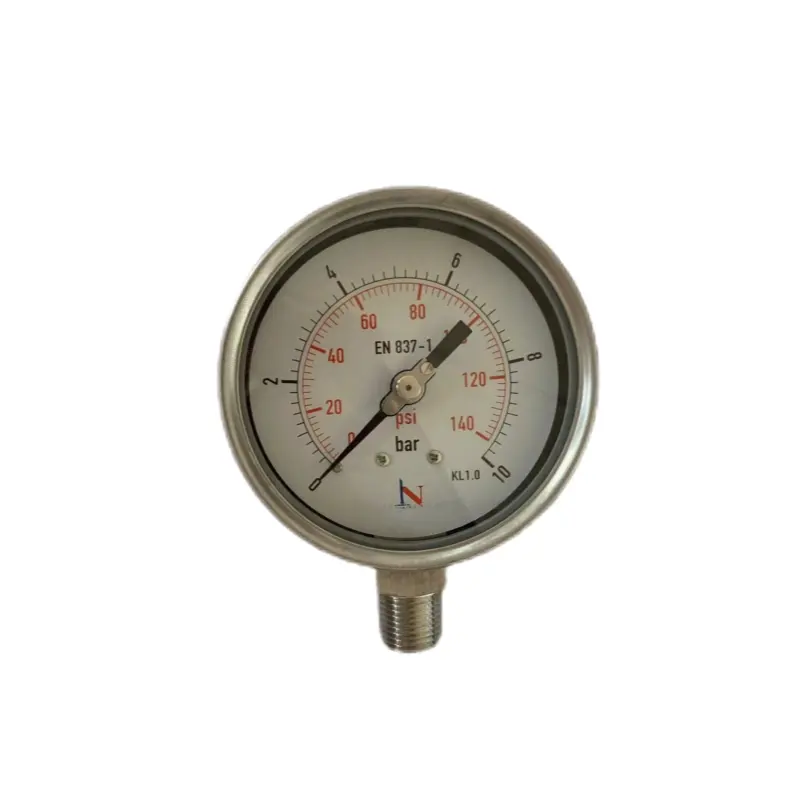


Why Choose a Liquid-Filled Pressure Gauge?
Release time: 2025-11-28
In industries such as automation, chemical engineering, energy, and petroleum, pressure measurement is a critical part of process control. Selecting the right pressure gauge is essential for accurately monitoring system pressure, preventing equipment failure, and enhancing safety. Among the various types of pressure gauges, liquid-filled pressure gauges are increasingly becoming the preferred choice due to their unique advantages. This article outlines the main benefits of liquid-filled pressure gauges and explains why they are an ideal choice.
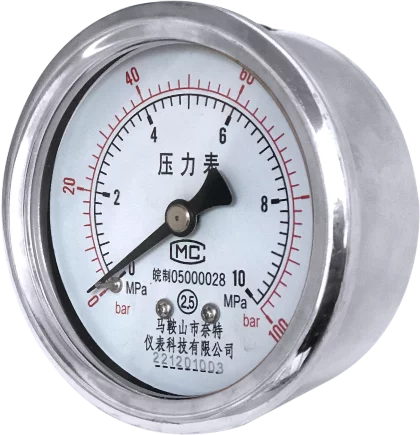
1. Improved Vibration Resistance
Liquid-filled pressure gauges are filled with liquid (such as glycerin or silicone oil), which helps absorb external vibrations and impacts on the internal mechanical components. In high-vibration environments, traditional mechanical pressure gauges may experience unstable readings or damage. In contrast, liquid-filled pressure gauges effectively dampen vibrations and shocks, ensuring stable and accurate measurements, and extending the lifespan of the equipment.
2. Adaptability to Harsh Working Environments
Many extreme temperature, humid, or corrosive environments can cause traditional pressure gauges to malfunction or deteriorate. The liquid filling in liquid-filled pressure gauges mitigates the effects of temperature fluctuations on the mechanical structure, providing more stable readings. These gauges can effectively prevent surface corrosion and frosting issues, particularly in high-temperature, high-humidity, or harsh chemical environments.
3. Reduced Mechanical Wear
The liquid filling in liquid-filled pressure gauges significantly reduces friction between the dial and the pointer, minimizing wear on the internal mechanical parts. This means that even with long-term operation, the accuracy and lifespan of the pressure gauge are ensured. For applications requiring high precision and extended operation, liquid-filled pressure gauges offer more reliable performance.
4. Enhanced Reading Stability
The liquid filling in these gauges stabilizes the pointer, reducing the impact of environmental changes on the readings. Especially in applications with significant pressure fluctuations, the liquid filling helps maintain steady readings and prevents large fluctuations. This is critical for precise measurement and real-time monitoring.
5. Suitable for Corrosive Media
In many industrial applications, the measured medium may contain corrosive substances such as chemicals or acidic gases. Traditional pressure gauges may suffer damage in these corrosive media. In contrast, the liquid filling in liquid-filled pressure gauges protects the internal mechanical components from direct contact with corrosive substances, making them suitable for various special environments, ensuring long-term stable performance.
6. Ease of Maintenance and Cleaning
The design of liquid-filled pressure gauges makes maintenance simpler. The liquid filling helps reduce the accumulation of dust or dirt, keeping the measurements accurate. Additionally, the liquid can be replaced when necessary, further extending the lifespan of the gauge.
Conclusion
Liquid-filled pressure gauges are the ideal choice for industrial applications due to their excellent vibration resistance, high-temperature and corrosion resistance, stability, and low maintenance costs. Whether in high-vibration environments or extreme temperatures and corrosive media, liquid-filled pressure gauges provide long-term, stable, and precise pressure measurement, ensuring the safety and efficiency of equipment operation.
We specialize in providing a full range of liquid-filled pressure gauges, covering different media, accuracy classes, and interface types. Our products are not just measuring tools, but reliable partners for the stable operation of your systems.