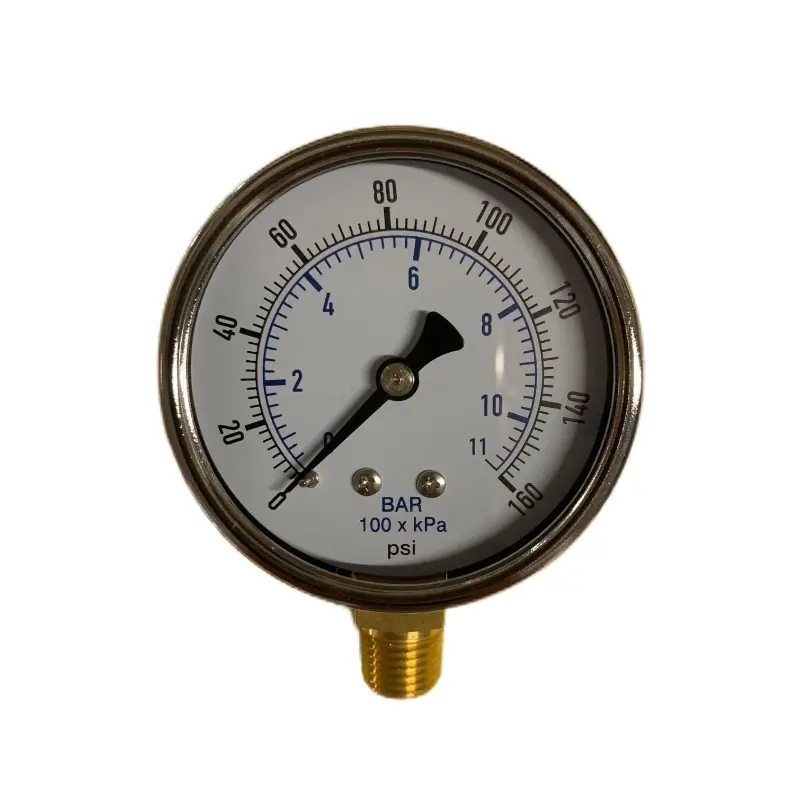


Why Mechanical Stainless Steel Pressure Gauges Still Matter
Release time: 2026-03-16
In the era of Industry 4.0, the industrial landscape is heavily dominated by smart transmitters, digital displays, and piezoresistive sensors. Facility managers and engineers are constantly bombarded with the narrative that complete digital transformation is the only path forward. However, this hyper-digital focus often overlooks the unpredictable and unforgiving nature of real-world industrial environments. When power grids fail, electronic screens blackout, or severe electromagnetic interference occurs, the digital mirage instantly vanishes, leaving critical processes completely blind.
This is precisely where the timeless engineering of mechanical instruments proves its irreplaceable value. For decades, traditional measurement tools have served as the ultimate failsafe in chemical plants, petrochemical refineries, and heavy machinery operations. Unlike their delicate electronic counterparts, these robust devices rely entirely on pure physical principles—specifically the proven deformation of a Bourdon tube under internal stress—to provide instantaneous, accurate readings without requiring a single milliamp of electricity.
Among these critical safety mechanisms, heavy-duty Stainless Steel Pressure Gauges remain the undisputed gold standard for aggressive applications. Whether navigating highly corrosive media, intense vibration, or extreme temperature fluctuations, these fully analog devices ensure continuous operational transparency. Today, we will explore the fundamental reasons why mechanical gauges are not just surviving the digital age, but remain an absolute necessity for modern industrial safety and reliability.
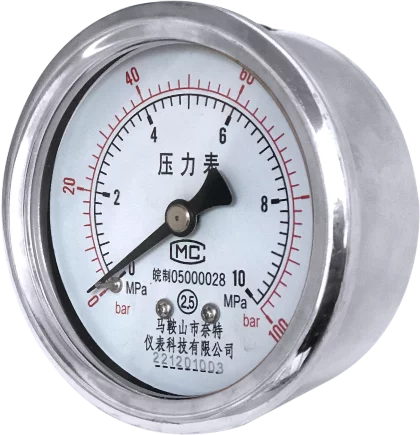
Digital vs. Mechanical: The Core Reliability and Failsafe Debate
The industrial push toward complete digitalization often ignores a fundamental engineering reality: added complexity inherently introduces new potential failure points. Digital pressure transmitters rely on delicate piezoresistive sensors, constant power supplies, intricate wiring conduits, and sensitive microprocessors. These electronic components are highly susceptible to environmental stress, electromagnetic interference (EMI), and ground loop issues. In stark contrast, mechanical gauges operate on the pure, unalterable physics of internal mechanisms.
Uninterrupted Process Transparency
- They provide continuous, direct-reading local indication even during catastrophic facility blackouts or total control system failures.
- They completely eliminate the maintenance burden of battery replacements, firmware updates, or complex digital recalibrations.
- They serve as the definitive “ground truth” for operators, acting as a reliable cross-reference when advanced digital SCADA systems display erratic or highly questionable readings due to signal loss.
Why 316L Metallurgy is Non-Negotiable for Aggressive Media
In sectors like petrochemical refining, industrial wastewater treatment, and offshore oil drilling, measurement instruments are constantly bombarded by harsh, unforgiving elements. Standard brass, copper alloy, or basic carbon steel internals will suffer from rapid material degradation when interacting with highly corrosive fluids, acidic gases, or aggressive media.
The Superiority of Full Stainless Construction
- Industrial-grade Stainless Steel Pressure Gauges strictly utilize 316L grade stainless steel for both the robust exterior case and all critical wetted parts, including the socket and the Bourdon tube.
- The addition of molybdenum in the 316L alloy matrix offers exceptional resistance to pitting, hydrogen embrittlement, and crevice corrosion, particularly in environments rich with chlorides and harsh chemical solvents.
- Advanced manufacturing techniques, such as fully TIG-welded gauge cases, prevent ambient moisture, saline mist, and corrosive atmospheric gases from penetrating the dial cavity, thereby ensuring the long-term integrity of the internal mechanical movement.
Conquering Parallax Error, Hysteresis, and System Pulsation
Heavy machinery and fluid power systems are frequently subjected to brutal hydraulic shocks, sudden pressure spikes, and continuous high-frequency mechanical vibrations. These extreme kinetic forces would quickly shatter a delicate digital LCD screen or disconnect the internal wire bonding of an electronic sensor board. Furthermore, mechanical systems must overcome inherent physical challenges like hysteresis and parallax error during visual inspections.
Advanced Dampening and Precision Engineering
- To combat severe vibration, these mechanical units feature liquid-fillable cases, commonly utilizing high-viscosity fluids such as heavy-duty glycerin or specialized silicone oil.
- This fluid acts as a highly effective, natural pulsation dampener, absorbing kinetic energy, preventing severe pointer flutter, and allowing operators to take accurate readings without visual strain.
- The liquid filling continuously lubricates the delicate internal moving parts, significantly reducing metal-on-metal friction and wear on the precision pinion and sector gear, extending the instrument’s operational lifespan well beyond ASME B40.100 standards.
Intrinsically Safe by Pure Physical Design
Hazardous industrial environments, such as Class I, Div 1 locations or ATEX zones in the global oil and gas industry, mandate exceptionally strict explosion-proof safety protocols. Installing powered electrical equipment in these highly volatile areas requires massive investments in heavy explosion-proof housings, complex intrinsic safety barriers, and rigorous, ongoing compliance audits.
The Ultimate Zero-Ignition Solution
- Purely mechanical Paslanmaz Çelik Basınç Ölçerler contain absolutely no electrical circuitry, microchips, or power sources whatsoever.
- Due to their physical nature, they inherently possess zero risk of generating an electrical arc or spark, making them the most logically sound and cost-effective choice for highly explosive atmospheric conditions.
- Facility engineers and safety managers can seamlessly deploy these instruments across volatile chemical processing plants without the heavy financial burden of complex electrical safety certifications and specialized hazardous-area wiring.
Maanshan Naite Instrument & Technology Co.,Ltd.: Your OEM Partner
When sourcing these mission-critical measurement components, the manufacturing origin and the vendor’s engineering pedigree dictate the ultimate reliability of the final industrial product. Maanshan Naite Instrument & Technology Co.,Ltd. stands as a premier, globally recognized manufacturer dedicated to engineering precision instrumentation for the toughest environments.
Precision Manufacturing and Custom Solutions
- As a comprehensive manufacturing partner, Maanshan Naite Instrument & Technology Co.,Ltd. offers specialized OEM and ODM solutions meticulously tailored to meet specific industrial, sanitary, and ultra-high-purity requirements.
- Rigorous quality control and comprehensive pressure cycle testing ensure that every single instrument meets exact global safety parameters and precise accuracy classes.
- By focusing on robust materials and flawless mechanical execution, they provide durable, highly accurate measurement tools designed specifically to outlast the competition in the most demanding applications worldwide.