

Panduan Komprehensif: Mencari Sumber Pengukur Tekanan Segel Diafragma Industri untuk Manufaktur Global
Waktu rilis: 2026-02-02
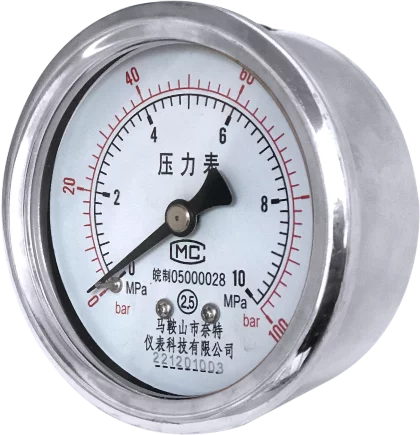
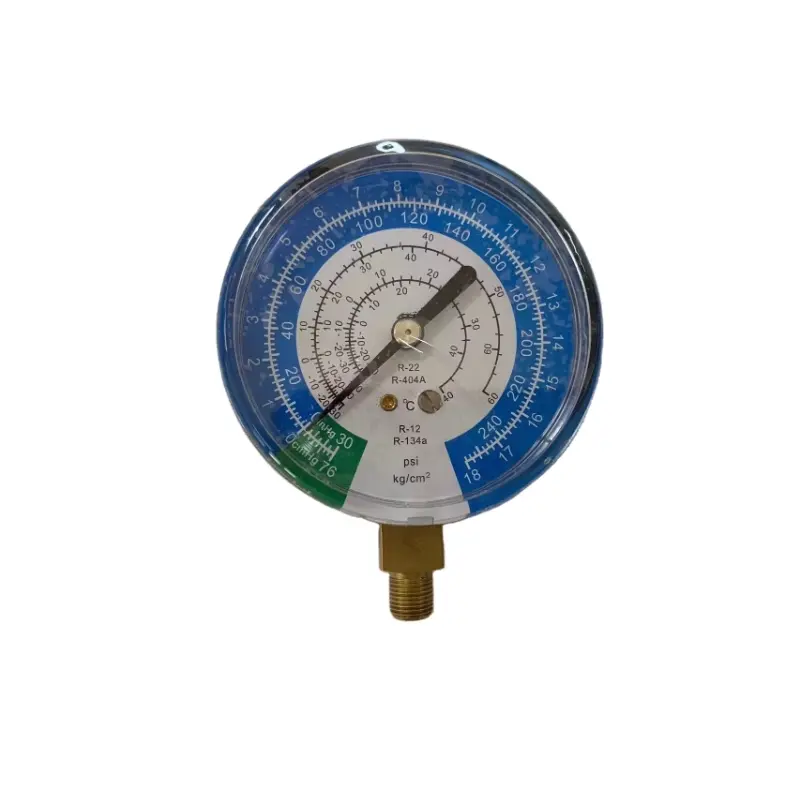
Dalam lanskap perdagangan industri global yang kompleks, memastikan umur pakai instrumen yang panjang merupakan prioritas utama bagi manajer pengadaan dan insinyur. Pengukur tekanan standar seringkali gagal ketika terpapar media korosif, kental, atau bersuhu tinggi. Di sinilah peran penting... pengukur tekanan segel diafragma menjadi aset yang sangat diperlukan untuk lini produksi modern.
Memahami Permintaan Global untuk Segel Diafragma
Dari pabrik kimia di Jerman hingga fasilitas pengolahan makanan di Vietnam, persyaratan untuk "isolasi media" tetap konstan. A pengukur tekanan segel diafragma Berfungsi sebagai penghalang yang kuat. Dengan memanfaatkan membran yang fleksibel, ia mentransmisikan tekanan ke elemen sensor internal tanpa memungkinkan cairan proses bersentuhan dengan bagian dalam pengukur yang sensitif. Ini mencegah penyebab paling umum kegagalan pengukur: korosi internal dan penyumbatan.
Spesifikasi Utama untuk Pembeli Internasional
Untuk memastikan Anda mendapatkan sumber dari tingkat teratas. produsen atau pabrikPerhatikan baik-baik parameter teknis berikut yang menentukan kualitas produk:
- Material Bagian yang Terkena Cairan: Meskipun Stainless Steel 316L adalah standar global untuk pengukur tekanan segel diafragma sanitasiUntuk aplikasi tingkat lanjut, mungkin diperlukan Hastelloy atau Monel untuk ketahanan kimia yang ekstrem.
- Penyelesaian Permukaan (Ra): Untuk sektor makanan dan minuman, kekasaran permukaan 𝑅𝑎<0,4 𝜇m sangat penting untuk mencegah penumpukan mikroba dan memastikan keberhasilan protokol Pembersihan di Tempat (Clean-in-Place/CIP).
- Cairan Pengisian: Tergantung pada suhu lingkungan dan proses, pabrik menawarkan berbagai cairan pengisi—seperti minyak silikon atau minyak nabati kelas makanan—untuk memastikan transmisi tekanan yang akurat dari ke .
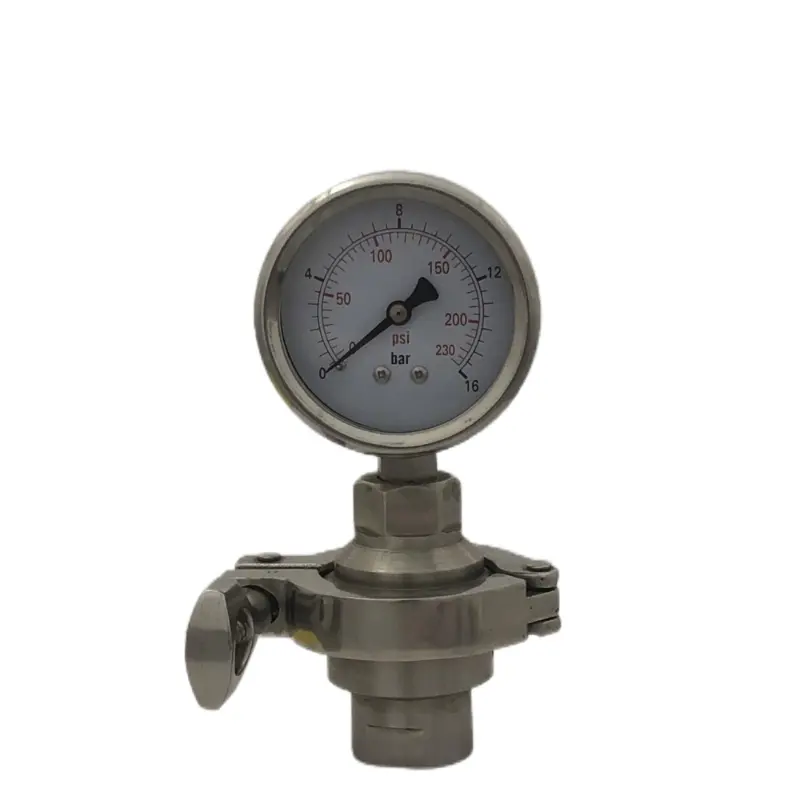
- Fleksibilitas Pemasangan: Distributor global sering mencari berbagai jenis koneksi, termasuk Penjepit Tiga Sisidesain berulir atau berflensa, untuk menyesuaikan dengan beragam standar perpipaan (ANSI, DIN, JIS).
Mengapa Distributor Memilih Pengukur Diafragma Kelas Atas?
Untuk sebuah Distributor B2B, tujuannya adalah untuk meminimalkan klaim purna jual. Kualitas tinggi segel diafragma sanitasi Desainnya menampilkan membran yang dilas laser yang memberikan perlindungan kebocoran superior dibandingkan dengan segel mekanis tradisional. Selain itu, penyertaan gerakan "teredam" atau wadah berisi cairan (Gliserin atau Silikon) melindungi pengukur dari getaran frekuensi tinggi yang umum terjadi di stasiun pemompaan skala besar, sehingga memperpanjang siklus perawatan secara signifikan.
Kesimpulan: Mengoptimalkan Rantai Pasokan Anda
Memilih yang tepat pengukur tekanan segel diafragma Ini adalah keputusan strategis yang memengaruhi efisiensi dan keamanan keseluruhan suatu fasilitas. Dengan berfokus pada kualitas material, presisi sambungan, dan stabilitas termal, pembeli global dapat memastikan sistem mereka beroperasi pada kinerja puncak dengan waktu henti minimal.
Solusi Industri Unggulan: Naite
Jika Anda mencari pabrik yang andal untuk mendukung distribusi global atau proyek berskala besar Anda, Naite menyediakan solusi yang direkayasa secara presisi yang memenuhi standar internasional tertinggi untuk daya tahan dan akurasi.
Pertanyaan yang Sering Diajukan (FAQ) – Pengukur Tekanan Segel Diafragma
Q1: Kapan saya harus memilih pengukur tekanan dengan segel diafragma dibandingkan pengukur tekanan standar?
A: Anda sebaiknya memilih pengukur tekanan segel diafragma jika media proses Anda adalah:
- Korosif: Kemungkinan besar akan menyerang komponen internal dari jalur rel standar.
- Kental atau Berserat: Mampu menyumbat tabung Bourdon yang sempit.
- Sanitasi: Membutuhkan permukaan yang terpasang rata untuk mencegah pertumbuhan bakteri dan memungkinkan sterilisasi Clean-in-Place (CIP).
- Suhu Ekstrem: Terlalu panas atau terlalu dingin untuk ditangani langsung oleh elemen sensor pengukur.
Q2: Apa saja bahan diafragma yang paling umum digunakan untuk lingkungan kimia yang keras?
A: Ketika Baja Tahan Karat 316L merupakan standar industri global untuk umum dan sanitasi untuk aplikasi, produsen khusus juga menawarkan Hastelloy C-276, Tantalum, atau Lapisan PTFEBahan-bahan ini memberikan ketahanan luar biasa terhadap bahan kimia yang sangat agresif seperti asam sulfat atau klorida.
Q3: Bagaimana cairan pengisi memengaruhi akurasi pengukur segel diafragma?
A: Cairan pengisi (biasanya minyak silikon atau minyak nabati) harus dipilih berdasarkan suhu operasi. Jika ekspansi termal cairan tidak diperhitungkan, hal itu dapat menyebabkan "pergeseran suhu" pada pembacaan tekanan. Kualitas tinggi pabrik Kalibrasi alat ukur secara spesifik sesuai dengan rentang suhu operasi pengguna untuk memastikan keakuratannya.